What a Home Inspection Actually Tells You in Colorado Springs
From hail damage to radon to sewer lines — here is what Colorado Springs home inspections reveal and how to read the report without panicking.
The inspection report lands in your inbox and it's 40 pages long. Everything in it sounds scary. The furnace is "at end of service life." The grading "needs improvement." There's "evidence of past moisture" in the crawlspace.
If you have never read one before, it can feel like the house is falling apart. In our experience, most of the panic is just a preparation problem. Once you know what to look for and what actually matters, the report stops being a stress bomb and starts being what it is supposed to be: a tool for making an informed decision.
Here is what Colorado Springs buyers need to understand about inspections in our area.
The Colorado Springs Specifics
Our climate and geography create a few inspection issues that show up over and over again. You should know about them before you even make an offer.
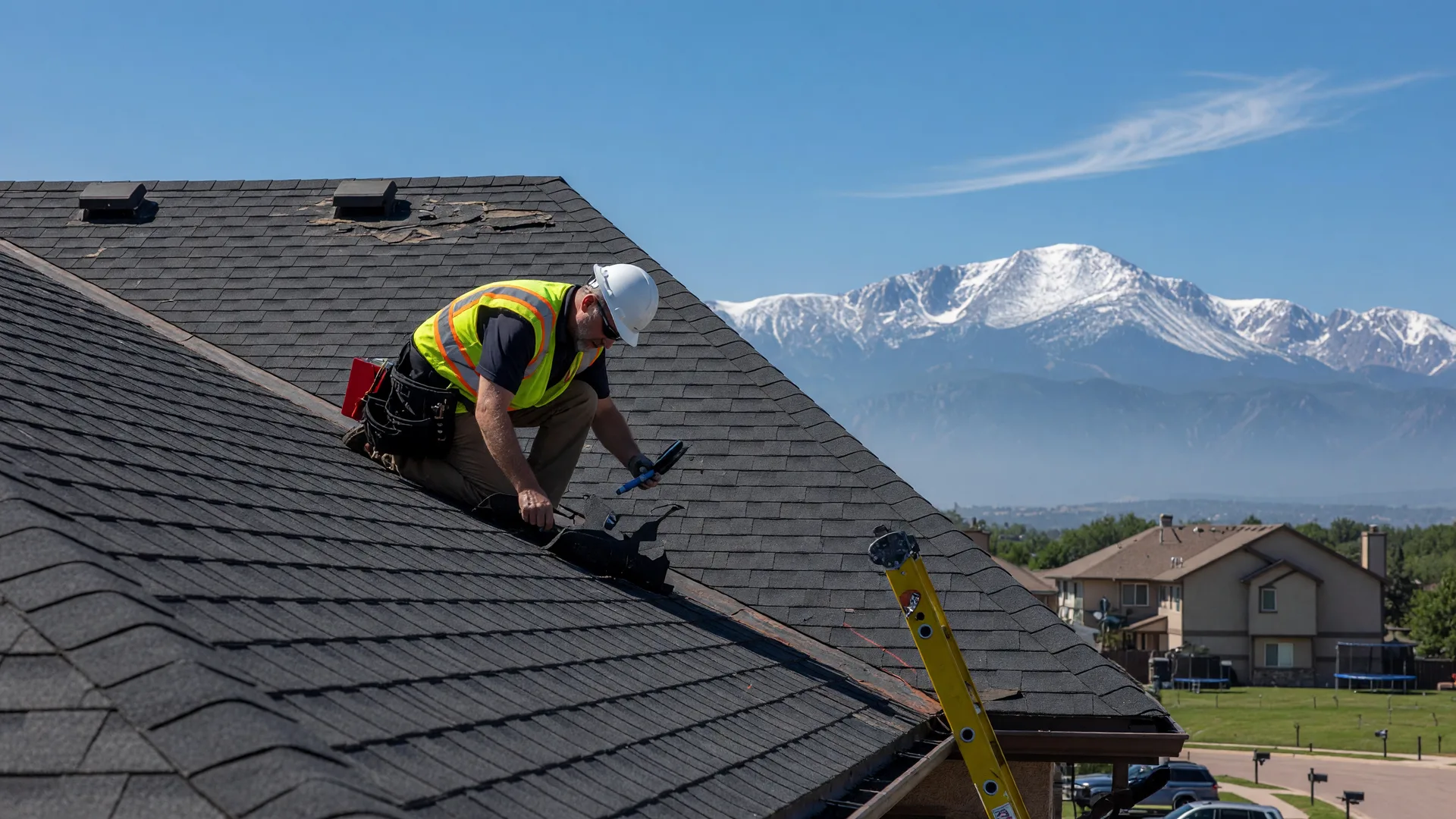
Hail damage to the roof. We get hailstorms in Colorado Springs, and they leave marks. An inspector will look for bruising on asphalt shingles, dents in metal flashing, and damage to vents and skylights. A roof that looks fine from the ground can tell a different story up close. If the damage is recent, it may be covered by insurance. If it is old, you are looking at a replacement timeline.
Radon. This is a big one in El Paso County. Radon is an odorless, colorless gas that comes up through the soil, and Colorado's geology means elevated levels are common. Radon testing is not part of a standard home inspection in every state, but it should be in Colorado Springs. If levels come back high, mitigation systems are straightforward and effective — but you want to know about it before closing.
Sewer lines. Older neighborhoods in Colorado Springs have trees that have been growing for decades. Roots find their way into clay sewer lines, and the result is a backup that will cost thousands to dig up. We recommend a sewer scope on any home built before 1990, and even on newer homes if there are large trees near the line. It costs a couple hundred dollars and can save you a nightmare six months after move-in.
Expansive soils. Parts of Colorado Springs sit on clay soils that expand when wet and shrink when dry. Over time, that movement can cause foundation cracking, shifting door frames, and uneven floors. An inspector will check for signs, but if you are looking at a home in an area known for soil issues, a structural engineer's opinion may be worth the investment.
How to Read the Report Without Panicking
Here is the thing about home inspections: inspectors are paid to find things. A good inspector will flag everything from a loose outlet cover to a cracked heat exchanger. The loose outlet cover costs $2 to fix. The cracked heat exchanger is a real concern. A 40-page report can have 39 pages of minor items and one page that actually matters.
We help our clients separate the signal from the noise. The questions that actually matter are:
- Is there a safety issue? Gas leaks, exposed wiring, carbon monoxide risks, structural concerns — those need to be addressed before closing, full stop.
- Is there a major system at end of life? A 25-year-old furnace or a 30-year-old roof is going to need replacing soon. That is not a defect, it is a reality of owning a home. The question is whether the price reflects it.
- Is there active moisture where there should not be? Past moisture that was fixed is very different from ongoing water intrusion. Your inspector can usually tell the difference.
- Is there something that you as the buyer cannot un-see? Sometimes a report reveals something that just does not sit right with you — and that is valid. If the foundation has more cracks than you are comfortable with, even if an engineer says it is fine, it might not be the right house for you.
"Most of what shows up in an inspection is either manageable or has been happening for years without anyone knowing. The goal is to identify the things that need attention now, understand what they cost, and decide if the house still makes sense for you."
— Jeff Morrell
What Happens Next
After the inspection, you typically have a few options depending on your contract:
- Ask the seller to make repairs. For legitimate issues — a leaking roof, a faulty electrical panel, a broken HVAC — this is standard and reasonable.
- Ask for a credit at closing. Sometimes it is easier for everyone if the seller gives you a credit and you handle the repair yourself after closing. That way you control the contractor and the quality of the work.
- Negotiate the price. If a major system needs replacing soon, the price of the home should reflect it. We will help you figure out what is fair.
- Walk away. If the inspection reveals issues that change your mind about the home, your contract likely gives you an out during the inspection period. We have never had a client regret walking away from the wrong house.
A Few Practical Tips
Be present for the inspection. You learn more in the two hours you walk through the house with the inspector than you will from reading the report alone. They will point things out, answer your questions, and show you where the shut-off valves are and how the water heater works. It is free education.
Read the whole report anyway. Even if you were there, the report will have photos and notes you will want to reference later. Keep a copy. When you go to sell this house someday, you will be glad you have it.
Do not skip the sewer scope. We mention this twice because it matters. A sewer line replacement can run $5,000 to $15,000 depending on depth and length. A scope costs around $200. Do the math.
The bottom line? A home inspection is not the final verdict on a house. It is information. And information is exactly what you need to make a confident decision.
If you are looking in Colorado Springs and want someone who will walk you through every step — including the 40-page inspection report — give us a call. We have got you.